


What is Proprioception? The Full Sensory Network
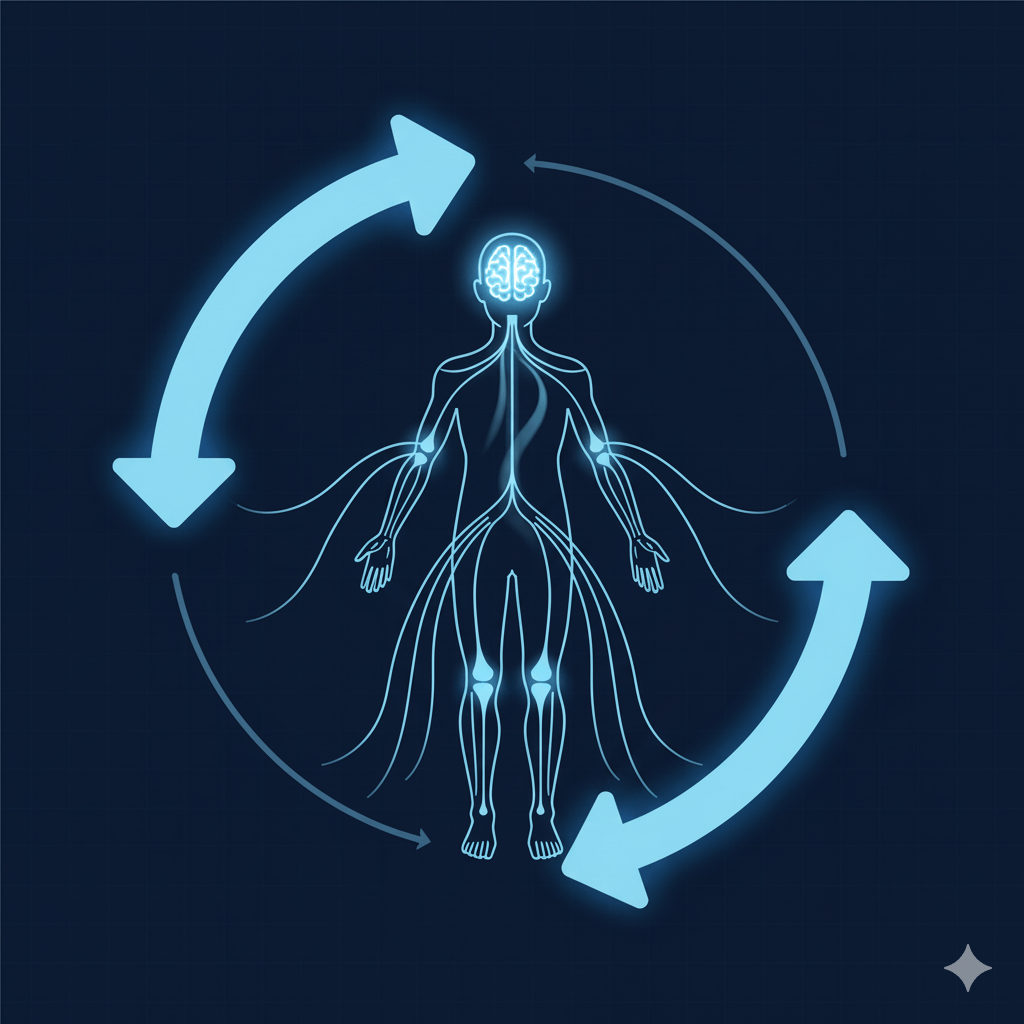
Proprioception is a continuous loop of communication between the central nervous system (CNS) and specialized sensory receptors called mechanoreceptors. This sensory network is not singular but a complex integration of signals from three main locations:
-
Muscles: Muscle spindles detect changes in muscle length and the rate of change.
-
Tendons: Golgi tendon organs (GTOs) detect changes in muscle tension.
-
Joints: Receptors within the joint capsules and ligaments detect joint position and movement.
-
Skin (Cutaneous Mechanoreceptors): This is the often-overlooked yet vital component. Low-threshold mechanoreceptors embedded in the dermis and epidermis—such as Ruffini endings (which are sensitive to skin stretch) and Pacinian corpuscles (sensitive to vibration and deep pressure)—provide the CNS with high-fidelity information about joint angle and movement.
For instance, when you grip an object or bend your finger, the stretching and compression of the skin over the joints provide cues that are critical for sensing the limb's movement and final position, especially when muscle or joint receptors are compromised. In fact, studies have shown that when muscle spindle input is blocked, cutaneous afferents can take over to maintain a useful, though less precise, sense of joint position.
Proprioception in Neurological Rehabilitation
Proprioceptive deficits are a common and debilitating consequence of neurological injuries and conditions, such as stroke, multiple sclerosis, Parkinson’s disease, spinal cord injury, and traumatic brain injury (TBI). Damage to the CNS or peripheral nerves can disrupt the neural pathways that transmit proprioceptive information, leading to significant challenges:
- Balance Impairment: Difficulty maintaining stability and increased risk of falls.
- Ataxia/Incoordination: Clumsy, erratic movements due to a lack of awareness of limb position.
- Gait Disturbances: An unsteady or unpredictable walking pattern.
- Motor Control Issues: Inability to accurately grade muscle force, resulting in movements that are too weak or too strong.
Restoring proprioceptive function is a cornerstone of neurological rehabilitation. Therapy focuses on challenging and re-educating the nervous system through techniques that emphasize sensory feedback:
- Weight-Bearing & Compression: Activities that provide deep pressure and joint compression, which stimulates joint and deep cutaneous receptors.
- Balance Training: Standing on unstable surfaces (e.g., foam pads) to challenge the entire sensorimotor system, especially the highly concentrated plantar mechanoreceptors (in the soles of the feet).
-
Repetitive Movement Tasks: High-repetition, goal-directed exercises that force the brain to re-map sensory feedback, using visual and tactile cues to compensate for proprioceptive loss.
The goal is to promote neuroplasticity—the brain’s ability to reorganize itself—by providing high-quality, continuous sensory input to rebuild the internal body map.
⚡ Enhancing Proprioception with Local Vibration Therapy (The Pulse Device)
Emerging research suggests that local vibration therapy can serve as a powerful adjunct to these established methods by safely and intensely stimulating the very receptors involved in the proprioceptive loop, including the cutaneous ones.
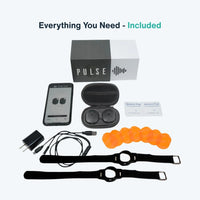
Devices like the Pulse Device deliver targeted, low-amplitude mechanical vibrations directly to a specific muscle, tendon, or even an area of skin. This localized stimulation has a direct and immediate effect on multiple types of proprioceptors:
- Maximal Muscle Spindle Activation: The high-frequency vibration mechanically stretches the muscle spindles, dramatically increasing their firing rate. This sends a stronger and more synchronized volley of sensory information up to the CNS.
-
Targeted Cutaneous Activation: The vibration is optimally detected by Pacinian corpuscles—the most rapidly adapting cutaneous mechanoreceptors. Applying the device to the skin around a joint or over a muscle belly provides a powerful, supplemental sensory signal that reinforces the feeling of the limb's presence and movement.
-
Enhanced Sensory Awareness: This heightened, non-painful sensory signal from both muscle and skin receptors makes the targeted limb's position and movement more salient to the CNS, potentially accelerating the process of sensory re-learning and motor control refinement during an exercise.
-
Facilitation of Motor Output: The increased afferent (incoming) sensory signal can interact with spinal reflex arcs, potentially improving muscle activation and timing during an active, goal-directed movement, thereby making each repetition of a rehabilitation exercise a more potent neuro-rehabilitation stimulus.
When used during or immediately preceding a rehabilitation exercise, the Pulse Device leverages the body's full array of mechanoreceptors to overload the proprioceptive system safely, thus helping to maximize the neuroplastic changes needed to rebuild the essential sense of self-in-space and improve functional independence.
 $0 Today
 Evaluate for 14 Days
 Keep or Return
